

Sagir Abdullahi Huguma
As preparations for the 2026 Hajj gather momentum, one fact is becoming increasingly clear: Nigeria’s Hajj operations are undergoing a phase of deliberate reform, strategic firmness, and renewed institutional confidence.
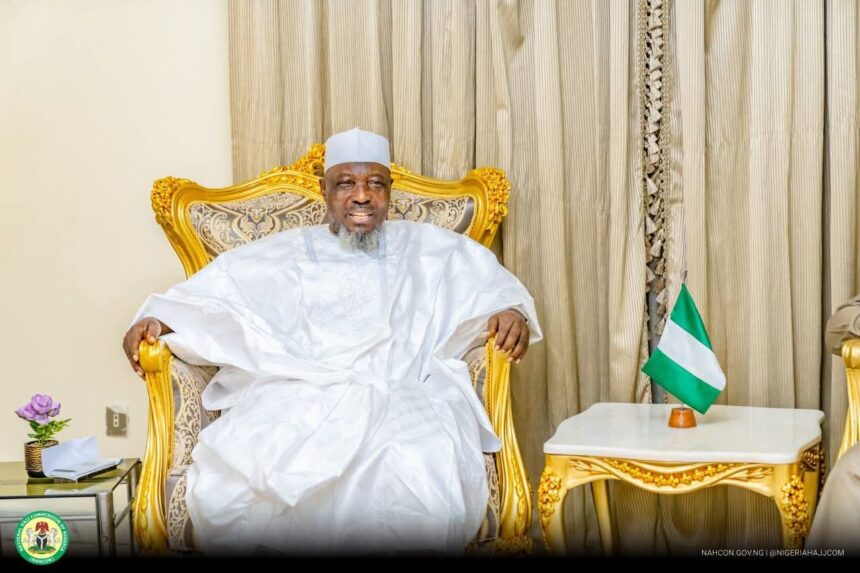
At the centre of this effort is the Chairman of the National Hajj Commission of Nigeria (NAHCON), Professor Abdullahi Saleh Usman, widely known as “Pakistan.
”The Hajj is not just a religious obligation; it is one of the most complex international logistical exercises undertaken annually by the Nigerian state.
It involves diplomacy, finance, aviation, accommodation, catering, healthcare, welfare, and strict compliance with Saudi Arabian regulations. Any weakness in leadership can expose pilgrims to hardship and the nation to embarrassment.
Against this backdrop, the approach adopted by NAHCON under Professor Abdullahi Saleh has been marked by foresight, firmness, and accountability.
EARLY AND STRATEGIC PLANNING
One of the defining features of the 2026 Hajj preparation is early engagement and planning. Under Professor Abdullahi Saleh’s leadership, NAHCON moved away from reactive administration to proactive coordination.
Critical processes—service provider selection, contract negotiations, stakeholder consultations, and engagement with Saudi authorities—were initiated in good time to avoid last-minute crises that have plagued Hajj operations in the past.
This early planning allowed NAHCON to:
1) Conduct competitive and transparent bidding for accommodation and catering services
2) Secure better terms for Nigerian pilgrims
3) Reduce operational uncertainty for State Pilgrims’ Welfare BoardsAlign Nigeria’s timelines with Saudi Hajj calendars.
PROTECTION OF NATIONAL AND PILGRIM INTERESTS
Perhaps the most defining moment so far in the 2026 Hajj preparations was NAHCON’s firm response to attempts to undermine signed contracts involving Nigerian service providers.
When pressure reportedly emerged to alter agreements after execution, the Commission, under Professor Abdullahi Saleh’s leadership, stood its ground.This action sent a strong message that:1) Signed contracts are sacrosanct.
2) Nigeria’s Hajj operation is governed by law, not coercion3) Pilgrims’ welfare cannot be compromised through indirect financial manipulation
By resisting any arrangement that would financially cripple service providers or indirectly affect service quality, the NAHCON Chairman demonstrated that pilgrim welfare is not negotiable.
INSTITUTIONAL DISCIPLINE AND RULE-BASED GOVERNANCE.
Professor Abdullahi Saleh “Pakistan” has consistently emphasized that NAHCON must operate as a rules-based institution, not a personality-driven body.
The 2026 Hajj preparations reflect this philosophy. Decisions are documented, contracts are legally vetted, and processes are guided by established frameworks rather than informal pressures.
This approach has helped:1)Restore confidence among service providers
.2) Strengthen coordination with State Pilgrims’ Welfare Boards.
3) Protect NAHCON from legal and reputational risks4)Improve Nigeria’s standing among international Hajj stakeholders5) Balancing Diplomacy with Firmness
Hajj administration requires diplomacy, but diplomacy must never come at the cost of dignity or justice.Professor Abdullahi Saleh has shown an ability to balance respect for Saudi institutions with firm defence of Nigeria’s interests. His leadership reflects the understanding that cooperation is strongest when built on mutual respect, transparency, and fairness.
This balanced posture is particularly important at a time when global Hajj operations are becoming more centralized and technologically driven. Nigeria’s ability to assert its position calmly but firmly is crucial for long-term sustainability.
ETHICAL LEADERSHIP ROOTED IN ISLAMIC VALUES
Beyond administration, the Chairman’s approach reflects deep grounding in Islamic ethics. Islam upholds justice (adl), trust (amanah), and responsibility. Any system that allows exploitation, extortion, or injustice especially in matters related to Hajj contradicts the very essence of the pilgrimage.
Professor Abdullahi Saleh’s insistence on fairness, transparency, and accountability aligns with both Islamic principles and modern governance standards. This moral clarity has become one of the strongest pillars of the 2026 Hajj preparations.LOOKING AHEAD As Nigeria moves closer to the 2026 Hajj season, challenges will inevitably arise.
However, the foundations laid so far suggest a system that is better prepared, more resilient, and more assertive than in previous years. Stakeholders are increasingly aware that the era of silent compliance and last-minute improvisation is giving way to structured planning and principled leadership.
CONCLUSION.
The preparation for the 2026 Hajj under Professor Abdullahi Saleh Usman (“Pakistan”) represents more than administrative efficiency it reflects a conscious effort to restore integrity, protect pilgrims, and uphold Nigeria’s dignity in global Hajj administration.Leadership is tested not when things are easy, but when pressure mounts.
In navigating complex negotiations, protecting contracts, and prioritizing pilgrim welfare, the NAHCON Chairman has demonstrated that firm leadership, guided by ethics and law, is both possible and necessary.
As the journey to 2026 continues, Nigerians pilgrims, stakeholders, and institutions alike have strong reason to support and encourage this direction. The success of the Hajj depends on it.
Sagiru Abdullahi Kwanar Huguma, writes from Kano.