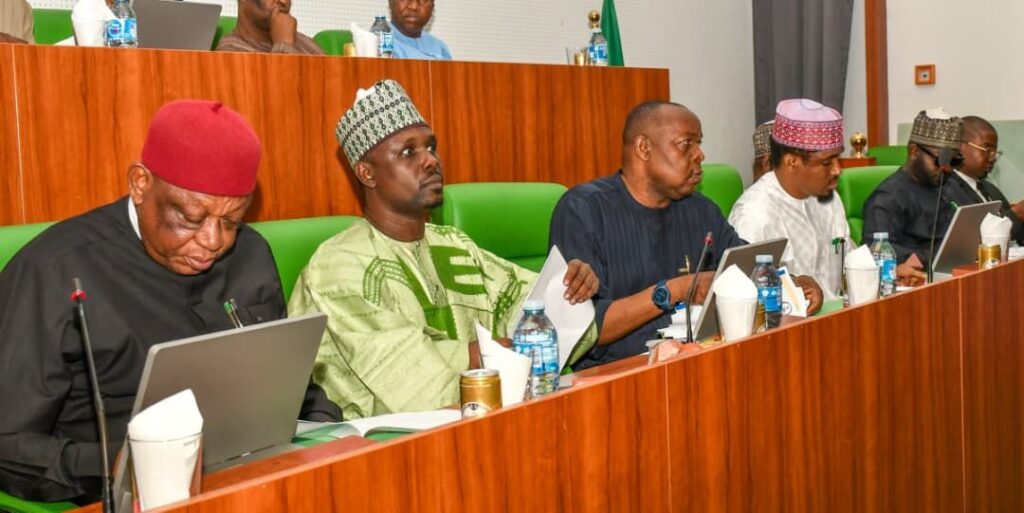


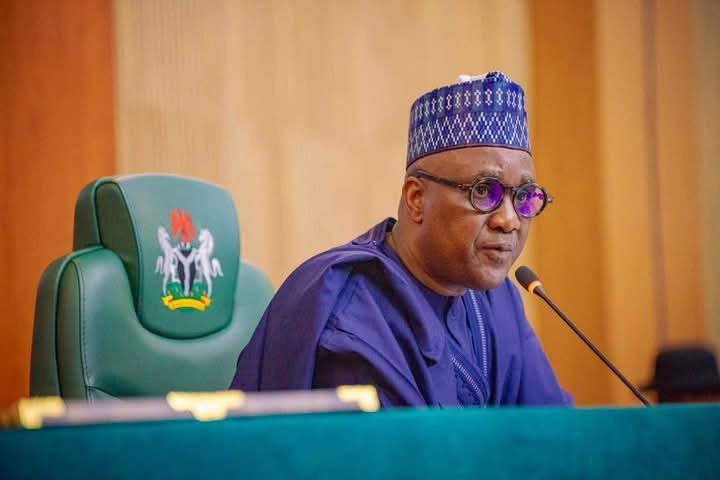
The Speaker House of Representatives, Dr. Abbas Tajudeen, has urged decisive legislative action toward establishing a multi-level policing system in Nigeria.
The Speaker who spoke at the public hearing on the Private Intelligence and Investigation Council Bill, 2024, organized by the House Committee on National Security and Intelligence, said security reforms have become a national priority and must now move from “theory to decisive action.”
Dr Tajuddin Abbas who was represented by the member representing Ilorin West/Asa Federal Constituency, Muktar Shagaya, said creating state police through constitutional amendment remains a viable option deserving serious national consideration.
He also emphasized the need to strengthen community policing as provided in the Police Act 2020 to make it more effective and responsive to local realities
Dr. Abbas Abbas said the House remains committed to reforms that will enhance public safety and strengthen Nigeria’s overall security architecture.
According to the Speaker, the National Assembly’s focus on security-related legislation, including the proposed Private Intelligence and Investigation Council Bill, underscores its determination to provide a legal framework that promotes accountability, professionalism, and collaboration among both public and private security actors.
On his part the Chairman, House Committee on National Security and Intelligence, Mr. Ahmad Satomi, said the proposed legislation to establish a Private Intelligence and Investigation Council will mark a major step toward strengthening Nigeria’s national security architecture through the regulation and professionalization of private intelligence operations.
Mr. Satomi described the bill as a forward-looking initiative that seeks to ensure accountability, professionalism, and ethical conduct within the country’s growing private intelligence and investigation industry.
According to Satomi, the proposed Council will serve as a regulatory body responsible for standardizing industry practices, providing accreditation and certification, and promoting continuous training and collaboration between the private and public security sectors.
He noted that the initiative comes at a time when Nigeria is confronted with a web of security challenges ranging from insurgency and banditry to cybercrime and kidnapping, stressing that innovative approaches are required to strengthen the country’s security infrastructure.
The lawmaker emphasized that while the efforts of Nigeria’s security agencies are commendable, the evolving nature of threats demands additional layers of support, regulation, and intelligence coordination.
The Committee Chairman, however acknowledged that not all stakeholders fully agree on every provision of the proposed legislation.