

The House of Representatives says it will expedite legislative action on a proposed Mandatory National Decarbonisation Bill aimed at tackling the growing economic risks posed by climate change.
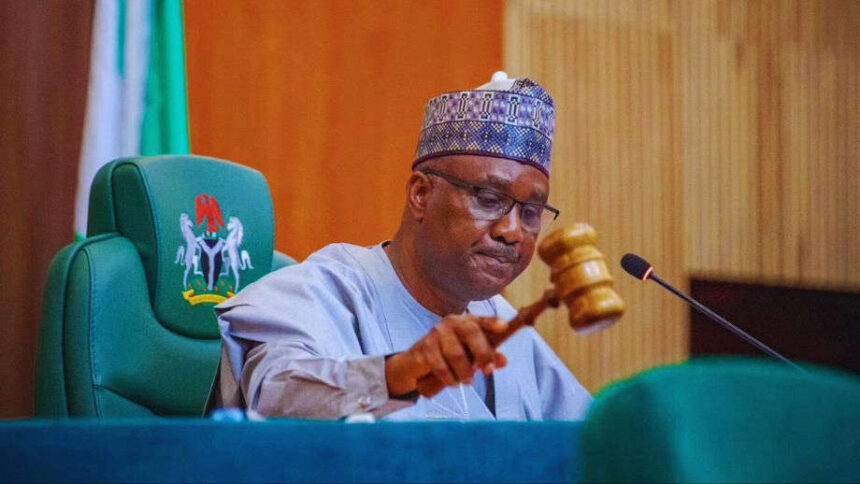
The Speaker House of Representatives, Dr. Abbas Tajuddeen, said the bill would help address climate-related challenges affecting the country and position Nigeria to better manage the impacts of global climate change.
Speaking at an event in Abuja focused on climate policy and a proposed national decarbonisation framework, Dr. Tajuddeen said the National Assembly would work with relevant stakeholders to ensure the legislation is inclusive before it is passed.
Represented by the Deputy Chairman of the House Committee on Basic Education, Muktar Shagaya, the Speaker warned that failure to address climate change could cost Nigeria hundreds of billions naira annually.
The Speaker said the drive toward decarbonisation should not be viewed as abandoning key economic sectors but rather as an opportunity to strengthen the country’s economy.
“The push for decarbonisation is not about abandoning critical economic drivers. It is about leveraging opportunities to diversify our economy, build competitive industries and align with global best practices that can attract major investments.”
He added that Nigeria, as one of Africa’s largest economies, must take proactive steps to mitigate the economic and environmental risks associated with climate change.
The Director for Africa at the Global Wind Energy Council, Wangari Muchiri, said Nigeria’s move toward decarbonisation presents significant opportunities for economic growth.
She noted that transitioning to a low-carbon economy could help create jobs, attract investment and diversify the country’s economic base.
Also speaking, Chairman of the House Committee on the Mandatory National Decarbonisation Programme, Sesi Whingan, pointed out that the National Assembly was committed to supporting the executive arm of government in advancing climate-related reforms.
Mr. Whingan said the House had already enacted several laws aimed at institutionalising decarbonisation policies and strengthening Nigeria’s climate response framework.
He added that the proposed legislation would provide a more structured approach to implementing national decarbonisation strategies while aligning Nigeria with global climate commitments.