

Ali Abare.
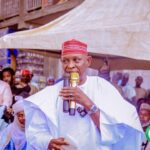
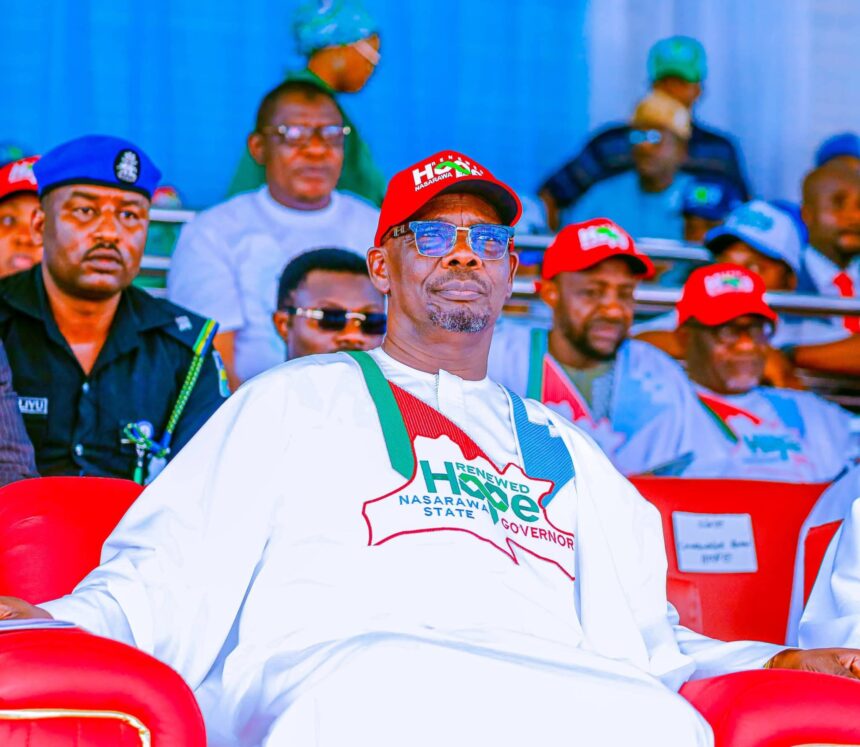
When Governor Abdullahi Sule stood before the massive crowd that filled the Lafia City Square penultimate Thursday, something remarkable was happening beneath the usual fanfare of political rallies.
Here was a governor, barely one year to complete his second term, hosting what looked like a thanksgiving service for policies that have caused real pain across the land. But the people came anyway. They came by the thousands, from every local government, every ward, every village, to say thank you.
And the man they came to thank most was not standing on that podium.For months now, Governor Sule has carried himself like a man on a mission.
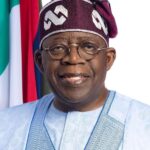
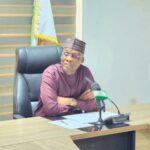
While other state chief executives have been cautious, even hesitant, in their public assessment of President Ahmed Bola Tinubu’s sweeping fiscal reforms, the Nasarawa State governor has been almost evangelical in his defence and promotion of the tough decisions taken in Abuja.
Not because he enjoys watching his people struggle. Not because he is immune to the cries of ordinary Nigerians feeling the pinch of subsidy removal. But because he claims to see something others do not yet see.”You don’t judge a surgery by the pain of the cut,” he told reporters recently, drawing on his decades of experience in the oil and gas sector.
“You wait for the healing to begin.”As a former managing director of Sadiq Petroleum, the man who later oversaw the acquisition of controlling shares in AP,
Governor Sule speaks the language of the oil industry with the fluency of an insider. When President Tinubu took the decision that every administration before him had dodged—removing the fuel subsidy entirely—Sule understood immediately what was at stake.
While politicians across party lines rushed to condemn, while labour unions threatened shutdown, while citizens groaned under the weight of sudden price increases, the Nasarawa governor quietly began the work of translation.
Not translation from English to Hausa or any local language. Translation from policy language to market woman language. Translation from economic theory to village square reality.
Everywhere he went in those early months, Governor Sule carried the same message: what looks like hardship today is investment in tomorrow. He did not ask the people to pretend the pain did not exist.
He distributed palliatives, he acknowledged the struggles, but he never stopped insisting that the path Nigeria was walking was the only path that leads anywhere worthwhile.It was not a popular position. It is still not a popular position in many quarters.
But something funny happened on the way to political disaster for those who backed the President’s reforms. The numbers started changing.For Nasarawa State, the change has been nothing short of transformational.
Before the subsidy removal, the state’s allocation from the Federation Account staggered into Lafia each month like a man recovering from illness. Three billion Naira one month. Five billion if the month was generous.
The kind of money that barely covers salaries and leaves nothing for dreaming. For years, governance in Nasarawa moved at the pace of a tortoise crossing a busy road, not because the governor lacked ideas but because the treasury lacked muscle.
Then the subsidy went. And the allocations trebled. Suddenly, the state was receiving what it always deserved but never got.
Governor Sule did not call a press conference to celebrate. He did not distribute the money to politicians or pad the budget with frivolities. He looked at the empty spaces in the state capital, looked at the choked roads, looked at the workers operating from cramped and dilapidated offices, and he got to work.
Today, driving through Lafia, you see what several months of improved revenues can build. The state capital can now now boasts newly dualized intracity roads, street and traffic lights that actually work.
The new State Secretariat Complex stands as a monument to what becomes possible when a state can plan without constantly checking its account balance. Six point eight billion Naira, every kobo accounted for, not a single kobo borrowed.
Civil servants who spent years working in buildings that should have been condemned now occupy an ultra-modern facility that would not shame any corporate headquarters in Lagos or Abuja.Then there is the Ahmed Bola Tinubu Interchange.
Sixteen billion Naira worth of infrastructure that has completely recaliberated how people move through the heart of Lafia. Named after the man whose tough decisions made it possible, the interchange stands as both practical solution and political statement. In a country where politicians often name projects after themselves,
Governor Sule chose to honour the President who gave states the financial room to dream again.The road to Shendam now wears a dual carriageway where previously vehicles crawled and competed.
Akwanga, that busy junction town where travellers from the north meet those heading to the south, an underpass is rising in Akwanga that will transform how traffic flows through that ancient trading post.
Down in Keffi, the gateway to the Federal Capital Territory, a flyover is taking shape that will finally separate local traffic from the endless stream of vehicles heading to and from Abuja. Another flyover is under construction in Mararaba, that bustling suburb where FCT commuters spend hours of their lives stuck in gridlock.
Here is what makes all of this remarkable: not a single kobo was borrowed to fund any of these projects. In an era when states routinely mortgage future generations to build for today, Governor Sule has been paying as he goes.
The money coming from Abuja, swollen by the reforms, has been enough. More than enough.This is the story the governor has been telling. Not with graphs and charts, not with economic models and technical jargon, but with concrete and steel. With roads you can drive on.
With offices you can work in. With flyovers that lift not just traffic but the spirit of a people who waited so long for their government to deliver.Penultimate Thursday, the people came to Lafia to say they understood.
They came from every corner of the state, not because anybody forced them, not because the governor was sharing money, but because for the first time in a long time, they could see where their commonwealth was going.
The rally, organised by the Renewed Hope Ambassadors, was meant to inaugurate local government, zonal and ward coordinators for the group that promotes the President’s agenda across the country. But it became something larger.
It became a homecoming.On that day, Senator Ahmed Aliyu Wadada, who had travelled a different political road, found his way back to the APC. Former Senator Philip Gyunka, a name with weight in Nasarawa politics, returned to the fold.
The Deputy Speaker of the Nasarawa State House of Assembly walked in, accompanied by five other members of the assembly. The state chairman of the opposition NNPP decided it was time to switch sides.
The publicity secretary of the PDP in the state, the man whose job was to attack the government, quietly crossed over.Why? What pulls politicians across lines when elections are not even near?
The answer lies in that word the President uses so often: renewed hope. When hope dies, politicians stay put, counting their losses, waiting for better days.
When hope renews itself, when people begin to believe again that government can work, that development is possible, that tomorrow might actually be better than today, politicians smell the change in the air.
They want to be on the side where things are happening.And things are happening in Nasarawa.Governor Sule has become more than just another APC governor going through the motions of supporting the President.
He has positioned himself as the chief evangelist of the Tinubu fiscal reforms, not because he expects anything in return, but because he has seen firsthand what those reforms have unlocked.
When other governors were running for cover, Sule stood on the rooftops and shouted that the medicine, however bitter, would work.
Today, he points to the new skyline over Lafia, the bulldozers reshaping Akwanga, the concrete pillars rising in Keffi and Mararaba, and he asks the people: was it worth it?The crowd at Lafia Square answered with their feet. With their voices. With their decision to join a movement they now believe in.
This is how the Renewed Hope Agenda travels from the pages of budget documents to the hearts of ordinary citizens. Not through press releases, not through media campaigns, not through the pronouncements of praise singers.
But through visible, tangible, undeniable change in the lives of communities. When a man in Akwanga spends twenty minutes less in traffic because of a new bypass linking Jos Road to Keffi Road, he does not need anyone to explain fiscal policy to him.
When a civil servant sits in an air-conditioned office for the first time in thirty years, she does not require lectures on subsidy removal. She understands.Governor Sule understood early. He took the political risk of standing with an unpopular policy because he believed in where it would lead.
Now that the fruits are ripening, he is not shy about sharing credit. Every project, every road, every bridge carries the imprint of federal reforms made possible by presidential courage.
The surgeon’s knife, as the governor puts it, cut deep. But the healing has begun. In Nasarawa State, you can see the scars transforming into something beautiful.