


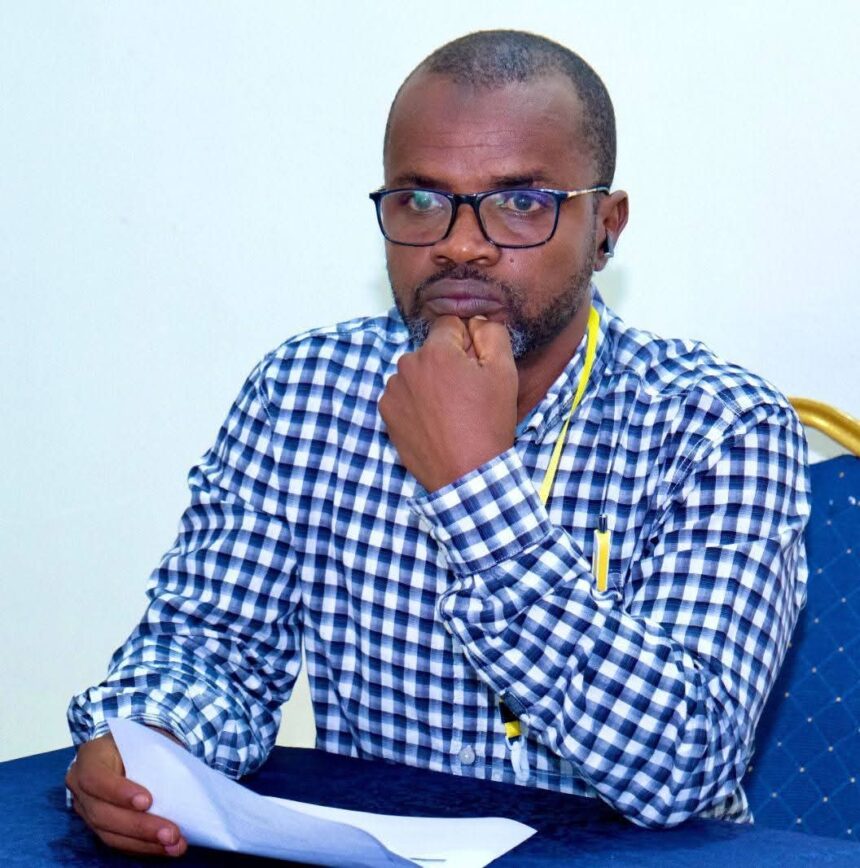
By Dr Kabiru Danladi Lawanti
I must admit that my love for journalism as a young boy was shaped by curiosity and a deep longing for social justice. I grew up glued to my father’s radio. As a child raised in a rural, largely herder community, radio was our most important tool for connecting with the outside world. I vividly remember how we gathered every afternoon at 2:00 p.m. to listen to DW Hausa, then switched to BBC Hausa at 2:45 p.m. as the two stations’ signals overlapped across 13, 16 and 19 megawatts.
These were not mere coincidences of timing; they were formative rituals that shaped how we understood the world and our place in it.In the late 1990s and early 2000s, Daily Trust became our darling. My first article was published there in 2003 — the first time I saw my byline in a national daily. We even formed a Daily Trust Writers’ Forum.
The quality of columnists the paper assembled made it especially influential in the North. For many of us, it represented credibility, balance and intellectual seriousness.Over time, however, several incidents forced us to understand more deeply how the media works. In the university, we were taught that no media message is neutral; every report carries ideological nuances.
As I followed the coverage of the Boko Haram crisis, kidnapping and banditry, the Ese Oruru and Yunusa Yellow saga, the killings in Plateau — especially the murder of wedding-bound travellers from Zaria — the bomb blast in Maiduguri on December 24, 2025, and the abduction and subsequent abuse of a teenage girl from Jigawa, I began to notice a troubling pattern.
Whether intentional or not, certain narratives appeared to frame particular ethnic or religious groups in consistently negative ways. History teaches us that sustained narrative framing can deepen divisions and fuel dangerous social outcomes, as seen in places like Bosnia and Rwanda.
It was therefore alarming to see a Daily Trust lead story describe an abducted girl as “missing.” Although the headline was later corrected to “abducted,” the initial choice of words raised serious concerns. This girl was not “missing”; she was abducted. The distinction is not semantic nit-picking. It goes to the heart of truth and accountability. A person who is missing may have wandered off or be unaccounted for. A person who is abducted is the victim of a crime. Word choice shapes moral perception. Something appears to be wrong at the editorial level, because framing is crucial in a sensitive story like this, especially when the facts point to coercion and criminality.
Initially, the paper also suggested that she was not a minor, despite substantial evidence indicating otherwise. That framing subtly shifted sympathy and credibility away from the victim. When a newsroom introduces doubt where there is little factual basis for it, it influences how readers interpret everything that follows. Corrections, even when issued, rarely travel as far as first impressions. Responsible journalism demands caution, verification and clarity — particularly when dealing with allegations of abduction, abuse or the vulnerability of a child.
This pattern of framing becomes even more troubling when we consider coverage of the recent killings of Muslim travellers in Plateau. Headlines described the victims primarily as “traders” or “travellers,” as though their occupation or movement were the defining elements of the tragedy. But these men were not attacked because they were traders. They were not killed because they were merely passing through. By many accounts, they were targeted because of their Islamic identity. Reducing them to occupational labels strips the violence of its religious and communal context and risks normalising what is, in reality, a deeply disturbing pattern.
Language can either illuminate injustice or obscure it. When killings are framed in neutral, occupational terms, the underlying motive becomes blurred. Over time, this fosters dangerous desensitisation. The public begins to perceive such incidents as routine highway crimes or generic communal clashes rather than as targeted acts rooted in identity. In a plural society already struggling with mistrust and sectarian tension, this type of framing does not promote peace; it distorts reality and postpones honest reckoning.
Journalism carries a profound moral burden. Words are not passive vessels; they are instruments that construct social meaning. To call an abduction a disappearance, or to describe identity-based killings in language that erases identity, is to participate — however unintentionally — in the dilution of truth. Accuracy, precision and ethical framing are not optional extras in reporting; they are the foundation of public trust. In stories involving vulnerable individuals or communal violence, editors must be doubly vigilant, because how a story is told often determines how a society understands — and ultimately responds to — it.