

By Ahmed Mohammed Sani Gwarzo Anipr.
The Rising Pillar of National Integrity: A Chronicle of Renewed Strength in Nigeria’s Anti-Corruption Vanguard the Independent Corrupt Practices and Other Related Offences Commission (ICPC) has, in recent years, evolved into a symbol of national resilience—representing the collective determination of a people unwilling to surrender their economic stability to greed.
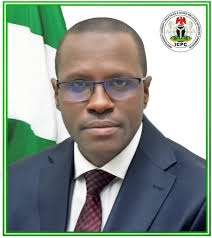
Under the steady, principled, and reform-driven leadership of its current Chairman, Dr. Musa Adamu Aliyu, SAN, the Commission has reemerged as a guardian of accountability, guided by a renewed culture of wisdom, courage, truth, and patriotic service.This transformation did not occur in isolation. It was neither accidental nor spontaneous.
It was propelled by strategic governance support and strong national policy direction championed by the President of the Federal Republic of Nigeria, Bola Ahmed Tinubu. His commitment to stabilising the economy resulted in empowering federal institutions to operate without compromise or fear.
Through the President’s unwavering backing, the Commission expanded its operational capacity, modernised its internal systems, and intensified its fight against the silent economic hemorrhage caused by unlawful wealth accumulation.
The Commission’s development reflects a disciplined journey—one that began with early reforms and continued with deliberate institutional strengthening. Over the years, the organisation deepened its expertise, adapted to emerging criminal patterns, and sharpened its investigative capacity.
These improvements enhanced its ability to identify, recover, and protect public assets long threatened by corrupt practices. Dr. Aliyu’s leadership did not merely revive old frameworks; it pioneered new intelligence pathways designed to detect economic sabotage before it matures into national loss.
A renewed spirit of professionalism now drives the institution—one anchored on values, discipline, and administrative clarity. Officers embraced proactive intelligence gathering, data synergy, and inter-agency cooperation, creating a coordinated ecosystem where the pursuit of unlawful funds became precise and structured. Through this transformation, the Commission regained public trust while expanding partnerships across local and international anti-corruption networks.No federal institution achieves transformation without confronting internal challenges.
In its early rebuilding stage, the Commission faced structural pressures, rising public expectations, and administrative limitations. Yet, with resolute leadership and strong national support from the presidency, these challenges became opportunities for modernisation.
Today, the Commission stands on a stronger operational foundation—integrating digital tools, enhanced personnel training, and legal innovation to meet global standards.
As economic crimes continued to threaten national stability, the Commission intensified efforts to track financial irregularities linked to procurement fraud, contract manipulation, and abuse of office. Strategic intelligence operations uncovered long-standing criminal patterns, paving the way for bold asset recovery efforts.
Funds previously hidden in private accounts and properties acquired through unlawful enrichment were gradually returned to the national treasury—restoring public confidence and reinforcing accountability across institutions.Dr. Aliyu’s leadership style—transparent, firm, and uncompromising—became a motivating force across the Commission.
His insistence on ethical behaviour inspired both junior and senior officers, uniting them behind a shared mission to protect national resources. What was once a fragmented workforce became a disciplined, cohesive institution rooted in integrity.Partnerships with civil society and educational institutions also flourished. Youth-centered awareness campaigns highlighted the dangers of corruption and the importance of national integrity.
These initiatives went beyond publicity; they cultivated a new generation committed to justice, accountability, and patriotic citizenship.In the legal landscape, the Commission secured more prosecutorial victories, reflecting improved investigative skills and deeper judicial collaboration. Each successful court case encouraged more whistle-blowers to speak out, strengthening the cycle of public involvement.
Internal capacity development became a priority. Officers received advanced training in financial intelligence, digital forensics, forensic auditing, and cross-border financial crime analysis. These skills enhanced the organisation’s ability to confront complex crimes involving sophisticated technology and modern financial tools.
Preventive strategies also gained prominence. The Commission implemented integrity audits across ministries and agencies—blocking loopholes before corruption occurred. These system reviews became some of the most effective tools for ensuring long-term governance stability.
One of the Commission’s notable milestones has been the improvement in asset recovery efforts. Misappropriated public wealth—whether in cash, properties, or diverted resources—found its way back to government coffers. Beyond financial figures, each recovery represented hope restored and confidence renewed.
President Tinubu’s policy direction further strengthened anti-corruption mechanisms, emphasising transparency in public finance. Institutional funding support and legislative reforms accelerated the Commission’s growth, transforming it into a formidable force capable of protecting the nation’s economic interests.
The synergy between the presidency and the Commission reflects a shared national vision—one where Nigeria’s wealth is protected, institutions are strengthened, and public trust is restored. This collaboration encouraged citizens to report corruption, knowing their voices would be heard.
As the Commission disrupted more economic crimes, it expanded its national footprint and deepened engagement with communities. Petitions increased, investigations expanded, and public participation grew—demonstrating that the anti-corruption crusade is a shared civic responsibility.
The transition from the previous Chairman, Bolaji Owasanoye, SAN, provided a solid foundation upon which Dr. Aliyu built an even stronger framework. This continuity ensured reforms remained stable, progressive, and impactful.
Across sectors—education, health, finance, infrastructure, and procurement—the Commission guarded public resources, protected essential services, and prevented national collapse. These interventions not only defended the economy but also preserved the dignity of citizens dependent on these services.
Growing public trust encouraged more collaboration with global anti-corruption bodies, elevating Nigeria’s reputation and enhancing local expertise. Infrastructure monitoring also improved, ensuring contractors delivered quality work and reducing fraudulent project abandonment.
In a nation long affected by illicit financial flows, the Commission’s relentless pursuit of accountability created a protective barrier against economic sabotage. Recovered funds strengthened the national budget, supported development, and sustained government services.
Each achievement reinforced ethical compliance across the civil service. A new cultural shift took root—one where accountability is expected, not optional.
Community engagement also increased, with traditional, religious, and social leaders joining integrity campaigns. These collaborations grounded anti-corruption efforts in communal values and moral responsibility.
Improved auditing systems and transparency measures encouraged better financial reporting across government institutions. Integrity pledges, compliance training, and transparency evaluations shaped a new governance culture.
Dr. Aliyu introduced a powerful message: the Commission is not an institution of intimidation but one of national protection. This message resonated widely, strengthening public cooperation.
As the Commission expanded its work into high-risk sectors, it closed channels of illicit wealth and ensured accountability. Its visibility grew through transparent public communication, regular updates, and an open-door approach to petitions.
Digital reporting platforms simplified citizen engagement, making the Commission more accessible and inclusive.
Over time, officers grew into seasoned professionals, earning national and international recognition. Their work strengthened the institution and fortified national confidence.
Today, the ICPC stands as a strong pillar of Nigeria’s governance architecture—symbolising hope, integrity, and national renewal. Its progress proves that corruption is not inevitable. With disciplined leadership, patriotic policies, and citizen support, Nigeria can reclaim its economic dignity.
As the Commission continues to evolve, it remains committed to protecting national wealth, defending democracy, and fulfilling its mandate with renewed integrity.
Ahmed Mohammed Sani Gwarzo is a public affairs analyst based in Kano. Contact number . 07034230877.