
By Muhammad Kabir Isa, ABU, Zaria, imkabir@abu.edu.ng
IntroductionIn
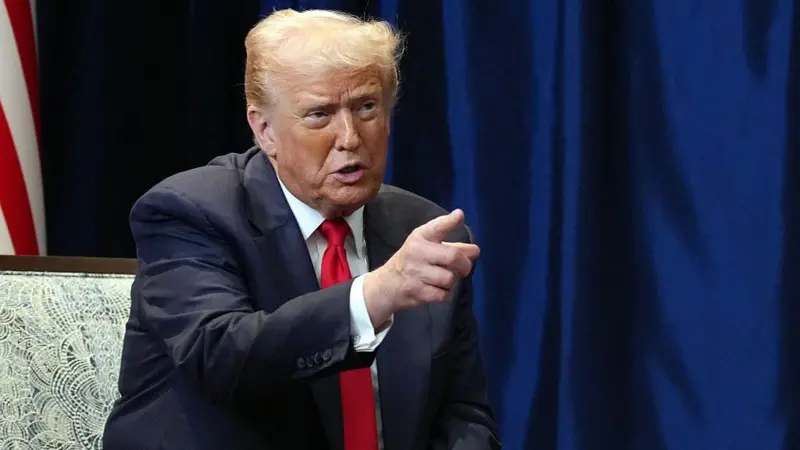
November 2025, the United States administration of President Donald Trump designated Nigeria as a “Country of Particular Concern” over alleged Christian genocide, threatening unilateral military action with characteristically aggressive rhetoric about going “guns-a-blazing” into what he called a “disgraced country.” This manufactured crisis, built on distorted narratives about religious violence, stands in stark contrast to America’s active complicity in the documented genocide against Palestinians in Gaza.
This article examines the empirical evidence exposing this hypocrisy, analyzes the geopolitical agendas driving these contradictory positions, and reveals how the United States selectively weaponizes human rights discourse to advance imperial interests while supporting actual genocide when it aligns with strategic objectives.1 Deconstructing Trump’s “Christian Genocide” Narrative in Nigeria*1.1
The Political Origins of a Misleading Designation*The Trump administration’s designation of Nigeria as a “Country of Particular Concern” (CPC) in November 2025 represents the culmination of a long-standing political project by American conservative lawmakers and evangelical groups rather than a genuine response to empirical realities on the ground. This designation, reinstated after having been initially imposed in 2020 then reversed by the Biden administration in 2021, relies on flawed data and politically motivated reports that systematically misrepresent Nigeria’s complex security landscape.
The political machinery behind this designation became particularly visible when Republican Senator Ted Cruz introduced the “Nigeria Religious Freedom Accountability Act of 2025” (S.2747), co-sponsored by five Republican senators, alleging “systematic persecution of Christians and other religious minorities” .
These lawmakers made extraordinary claims that “more than 52,000 Christians have been killed in Nigeria since 2009, while over 20,000 churches and Christian institutions have been destroyed or attacked”. Such figures have been repeatedly cited in right-wing American media circles despite being thoroughly debunked by empirical research.
House Appropriations Committee Chairman Tom Cole (R-OK) exemplified the ideological motivation behind this campaign when he declared that “Nigeria is the most dangerous nation on Earth to follow Christ” and praised Trump’s designation as making clear that “religious persecution will not be tolerated” .
This political positioning, however, stands in direct contradiction to documented evidence about the actual nature of violence in Nigeria.*1.2 What Empirical Data Reveals About Nigeria’s Conflict*Comprehensive data collected by the Armed Conflict Location & Event Data Project (ACLED), a U.S.-based crisis monitoring group, systematically dismantles the “Christian genocide” narrative.
Their research demonstrates that out of 1,923 documented attacks on civilians in Nigeria during 2025, only 50 specifically targeted Christians because of their religion .
This represents approximately 2.6% of total attacks on civilians – a tragic but statistically small fraction that utterly contradicts claims of systematic religious persecution.Ladd Serwat, a senior Africa analyst at ACLED, emphasized that “insurgent groups such as Boko Haram and Islamic State West Africa often present their campaigns as anti-Christian, but in practice, their violence is indiscriminate and devastates entire communities”.
The violence in Nigeria, he noted, is “part of the complex and often overlapping conflict dynamics in the country over political power, land disputes, ethnicity, cult affiliation, and banditry”.The empirical evidence further reveals that Boko Haram and other insurgent groups operating in Nigeria’s northeast have actually killed more Muslims than Christians, despite their anti-Christian rhetoric.
These groups predominantly operate in Muslim-majority regions and have repeatedly targeted mosques, Muslim religious leaders, and Muslim communities they accuse of insufficient adherence to their extremist interpretation of Islam .
This pattern of indiscriminate violence fundamentally undermines the narrative of religiously motivated genocide against Christians.*1.3 Nigerian Government and Security Response*
The Nigerian government has consistently rejected both the “Christian genocide” narrative and the threat of U.S. military intervention. Kimiebi Imomotimi Ebienfa, a spokesman for Nigeria’s Ministry of Foreign Affairs, explicitly stated: “We are not proud of the security situation that we are passing through, but to go with the narrative that only Christians are targeted, no, it is not true. There is no Christian genocide in Nigeria” . He emphasized that “Muslims are being killed. Traditional worshippers are being killed…
The majority is not the Christian population”.Daniel Bwala, a spokesman for Nigerian President Bola Tinubu, responded to Trump’s military threats by characterizing them as “Trump’s style of going forceful in order to force a sit-down and have a conversation” rather than a genuine plan of action .
While welcoming international cooperation in fighting terrorism, Bwala firmly stated that “when it comes to matters of military operation in Nigeria, this is a matter that two leaders have to agree on. It is not something unilaterally you can do especially since that country is a sovereign state.”
*Table: Religious Composition of Nigeria’s Current Security Leadership*| Position | Officeholder | Religious Affiliation ||—————————–|—————————————-|—————————|| Chief of Defence Staff | General Christopher Gwabin Musa | Christian || Chief of Army Staff | Lieutenant-General Olufemi Olatubosun Oluyede | Christian| Chief of Naval Staff | Vice Admiral Emmanuel Ikechukwu Ogalla | Christian || Inspector General of Police | Kayode Egbetokun | Christian || Director-General of State Security Service | Adeola Ajayi | Christian || Comptroller General of Immigration | Kemi Nandap | Christian |Furthermore, the religious composition of Nigeria’s security leadership itself contradicts the narrative of state-sponsored religious persecution.
As illustrated in the table above, Christians overwhelmingly dominate Nigeria’s current security apparatus .
This reality makes the claim of official complicity in Christian persecution empirically untenable and demonstrates how the U.S. administration’s narrative collapses under minimal scrutiny.*2 Documented U.S. Support for Actual Genocide in Palestine**2.1 International Legal Determinations of Genocide*
While the United States aggressively promotes the baseless narrative of Christian genocide in Nigeria, it simultaneously provides diplomatic cover, military assistance, and financial support to Israel despite multiple authoritative determinations that Israel is committing genocide against Palestinians.
The International Court of Justice (ICJ), the United Nations’ principal judicial organ, has found substantial evidence indicating plausible genocide in Gaza, yet the U.S. has continued its unwavering support for Israeli military operations.In July 2025, a coalition of 30 states from Africa, Asia, Europe, and the Americas convened at the Emergency Conference of The Hague Group in Bogotá and unanimously agreed that Israel’s assault on Gaza constituted genocide, implementing coordinated diplomatic, legal, and economic measures to restrain Israel’s actions .
The conference, co-chaired by Colombia and South Africa, represented “the most ambitious multilateral action since the start of Gaza genocide 21 months ago” and included twelve states committing to immediate measures including arms embargoes, sanctions, and legal accountability through universal jurisdiction.UN Special Rapporteur on the situation of human rights in the occupied Palestinian territory Francesca Albanese endorsed these measures, stating “The clock is now ticking for states — from Europe to the Arab world and beyond — to join them”.
This international consensus, developed through formal legal and diplomatic channels, stands in stark contrast to the domestically-driven political campaign behind the Nigeria designation.*2.2 American Complicity in Palestinian Genocide*The United States’ complicity in the Palestinian genocide extends beyond diplomatic protection to active material support.
Throughout the Gaza conflict, the U.S. has continued transferring arms to Israel, including precision-guided munitions and other offensive weapons used in attacks on civilian infrastructure, schools, hospitals, and residential areas .
This military support has persisted despite widespread documentation of these weapons being used in potential war crimes and violations of international humanitarian law.In a significant development highlighting American hypocrisy, the Bogotá conference participants committed to “prevent the provision or transfer of arms, munitions, military fuel, related military equipment, and dual-use items to Israel” and to “prevent the transit, docking, and servicing of vessels at any port… in all cases where there is a clear risk of the vessel being used to carry arms… to Israel” .
These measures explicitly acknowledge that continued arms transfers facilitate genocide and violate international legal obligations.
South African Minister of International Relations and Cooperation Ronald Lamola framed these actions as a “collective affirmation that no state is above the law,” directly challenging the U.S.-led exception for Israel . Colombian President Gustavo Petro further emphasized that “Together, we have begun the work of ending the era of impunity.
These measures show that we will no longer allow international law to be treated as optional, or Palestinian life as disposable” – a statement that implicitly condemns American foreign policy double standards.*2.3 The Theological Hypocrisy of Destroying Christian Communities*Perhaps the most striking dimension of American hypocrisy lies in the destruction of Christian communities in Palestine with U.S.-supplied weapons.
Despite the Trump administration’s purported concern for Christian persecution in Nigeria, it has supported military operations that have systematically destroyed ancient Christian communities in Gaza and the West Bank.Several of the oldest Christian communities in the world, including churches, schools, and cultural centers dating back to the earliest centuries of Christianity, have been damaged or destroyed by Israeli military operations.
The U.S. administration, while positioning itself as the global defender of Christians, has simultaneously enabled the eradication of these historic Christian communities through its unconditional support for Israeli military actions.
This contradiction exposes the instrumental nature of U.S. religious freedom advocacy – Christian lives matter only when their persecution can be weaponized against geopolitical adversaries like Nigeria, while the actual destruction of Christian communities by U.S. allies generates no comparable outrage or action.
This selective concern reveals that the administration’s religious freedom agenda is fundamentally geopolitical rather than humanitarian in nature.
Section 3: Fault Lines, External Scrutiny, a Complex Reality and Embassy Complicity in Nigeria*3.1 The Selective Outrage of the U.S. Embassy*The activities of the U.S. Embassy in Nigeria, as reported on its official newsroom, paint a picture of a mission deeply engaged in a wide range of bilateral issues—from strengthening commercial ties in agriculture and technology to supporting public health initiatives and educational exchanges.
This engagement demonstrates that the embassy possesses a sophisticated, on-the-ground understanding of Nigeria’s social and economic landscape.
This makes its endorsement of the simplistic “Christian genocide” narrative not a matter of ignorance, but a choice to ignore its own empirical data for a political agenda.This selective focus becomes starkly hypocritical when contrasted with the U.S. position on Israel.
While the U.S. has threatened Nigeria with an arms embargo over human rights concerns, it has simultaneously vetoed over 50 United Nations Security Council resolutions critical of Israel, shielding it from accountability for actions in Gaza and the West Bank.
This double standard reveals that the application of human rights and humanitarian law is not principle-based, but is subservient to strategic and political interests.*3.2 The Nuanced Reality of Violence in Nigeria*Empirical data on the violence in Nigeria presents a complex picture that challenges singular narratives.
While the suffering of Christian communities is severe and well-documented, the data reveals that the violence is not one-sided.- Indiscriminate Nature of Insurgent Violence: Monitoring groups have documented that Boko Haram and other insurgent groups have killed more Muslims than Christians.
This is partly because these groups predominantly operate in Nigeria’s northeast, a Muslim-majority region, and have repeatedly targeted mosques, Muslim religious leaders, and Muslim communities they accuse of not adhering to their extremist interpretation of Islam .
Their campaign of violence is fundamentally indiscriminate, devastating entire communities irrespective of faith .- Multi-faceted Conflict Drivers: Analyses consistently stress that the violence is a complex mix of “governance failures, corruption, poverty, climate-induced livelihood pressures, insurgency and organized criminality” .
To reduce this multifaceted conflict solely to a religious war is a significant oversimplification of the empirical reality on the ground.The following table synthesizes key empirical points that counter a simplistic religious war narrative:| Aspect | Empirical Fact | Source Insight || :————————- | :——————————-| :————————— || Primary Victims | Boko Haram has killed more Muslims than Christians. | These groups operate in Muslim-majority areas and target those they deem insufficiently orthodox. |*Core Conflict Drivers* Violence stems from governance failure, resource competition, and criminality, not purely religion. |
Conflict is driven by a “complex and often overlapping” mix of political, economic, and social factors. *Ideological Targets* Boko Haram’s ideology opposes the Nigerian state and other Islamic interpretations. |
The group’s worldview “combines… religious exclusivism that opposes all other value systems, including rival interpretations of Islam.”
*3.3 The Deliberate Ignorance of Complex Conflict Drivers*Analysts and empirical data consistently stress that the violence in Nigeria is a complex mix of “governance failures, corruption, poverty, climate-induced livelihood pressures, insurgency and organized criminality”. To reduce this to a religious war is a dangerous oversimplification.
Fr. Atta Barkindo of the Kukah Center notes that the government’s failure to protect all citizens, coupled with the fact that a majority of victims in some attacks are Christian, naturally fuels a perception of persecution. However, he clarifies, “I don’t think there is a deliberate intention on the part of the Nigerian government to kill Christians or to deploy state actors to do so”.The embassy’s perpetuation of the religious war narrative is a form of institutional deception.
It ignores crucial facts, such as:Muslim-on-Muslim Violence: Banditry in the northwest predominantly pits Fulani herders against Hausa communities, both of whom are predominantly Muslim.*Indiscriminate Terror:* Boko Haram, though using anti-Christian rhetoric, has killed more Muslims, including clerics and villagers it deems insufficiently orthodox.*Religious Diversity of Security Leadership:*
Nigeria’s security apparatus is overwhelmingly led by Christians, from the Chief of Defence Staff to the heads of the Army, Navy, Police, and intelligence services, making claims of state-sponsored anti-Christian genocide empirically untenable.
The perpetuation of an oversimplified religious war narrative can be a form of institutional deception. It ignores crucial facts, such as:*Muslim-on-Muslim Violence:* Banditry in the northwest predominantly pits Fulani herders against Hausa communities, both of whom are predominantly Muslim.*Religious Diversity of Security Leadership:*
Nigeria’s security apparatus is overwhelmingly led by Christians, from the Chief of Defence Staff to the heads of the Army, Navy, Police, and intelligence services, making claims of state-sponsored anti-Christian genocide empirically untenable.*3.4
The Unanswered Question: Funding the Insurgencies*A critical gap in both the official U.S. narrative and the public discourse is the question of who is funding the widespread banditry and insurgency.
The sophistication and scale of the violence, which has led to an estimated 3 million internally displaced persons, suggest significant resource flows.
The failure of Western intelligence agencies, with their vast global networks, to publicly identify and help dismantle these financial pipelines raises legitimate questions about complicity or wilful blindness. Is this a conflict they have an interest in managing, rather than solving?*4:
Geopolitical Agendas, the Perversion of Faith and Conclusions**4.1 The “Christian Genocide” as a Pretext for Imperialism and the Perversion of Islam*The evidence suggests that the “Christian genocide” narrative can be a manufactured pretext for a broader geopolitical agenda.
This strategy is not new; it follows a familiar pattern used to justify foreign interference in sovereign nations. This strategy is also not new; as it follows a familiar pattern of “humanitarian intervention” used to justify foreign interference in sovereign nations.
The goal is to turn Nigeria—Africa’s most populous nation and a key strategic prize—into a client state.This aligns with what geopolitical analyst Daniel Levy describes as a “rebellion against western hypocrisy”.
For much of the world, the situation in Palestine has become an “avatar of this rebellion,” symbolizing a rejection of a Western-dominated international order that applies rules selectively.
By employing the same playbook in Nigeria, the U.S. is demonstrating the very hypocrisy that is eroding its global credibility.Crucially, the actions of militant groups like Boko Haram and ISWAP represent a violent perversion of Islamic teachings, not a reflection of the religion itself.
Their ideology is characterized by:*Religious Exclusivism:* The Brookings Institution notes that Boko Haram’s worldview is defined by a “religious exclusivism that opposes all other value systems, including rival interpretations of Islam” .
They use extremely narrow criteria to define who counts as a Muslim, effectively declaring all who disagree with them as infidels.*A Politics of Victimhood:*
This exclusivism is combined with a “politics of victimhood in response to what it sees as a decades-long history of persecution against Muslims in Nigeria”. This narrative of grievance is then used to justify their brutality against both Christians and Muslims.
It is vital to state unequivocally that the killings of Muslims and Christians by these groups are not sanctioned by Islam. Mainstream Islamic theology and the vast majority of Muslims worldwide oppose this violence.
The actions of these militants stem from a distorted, extremist political ideology that hijacks religious symbolism, not from the core principles of the Islamic faith.*4.2 The Agenda of Zionism and the Silence of ISWAP*A telling piece of evidence that exposes the geopolitical underpinnings of