
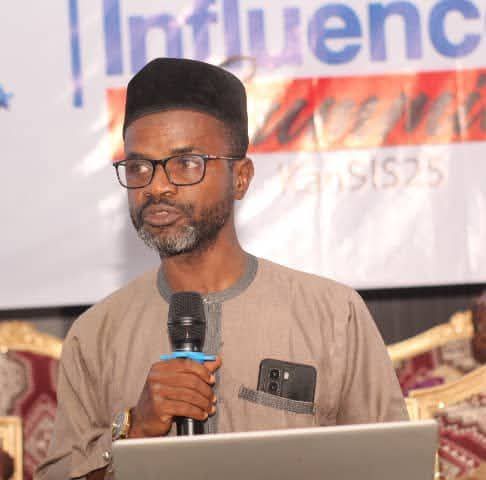
By Dr Kabiru Danladi Lawanti.
There are moments you scroll through Nigeria’s social media space and feel a deep sense of shame and embarrassed, not for yourself, but for the nation we are becoming.
The kind of ignorance and hate that freely circulate online today is frightening. You read certain posts and wonder how people who went through the same schools, lived in the same communities, and claim to serve the same God can descend into such moral darkness.
I woke up this morning to yet another hateful post shared by someone on Facebook calling himself”Evangelist”, and what disturbed me was not just the comment itself, but the comments under the post. People hailing him as a hero, grown men and women, educated adults — clapping for ignorance.
Earlier, I had engaged one such extremist who shared a clip of another dullard, who appeared on a national TV, claiming that a Christian girl from “Guoza” in “Bruno” State was denied admission into the University of Abuja despite scoring 277 in the “UDME.”
He also claimed she was denied indigene letter by the “Bruno” state liaison office in Abuja.
The thick headed moron was displaying ignorance with the confidence of someone delivering gospel truth. When I challenged the sharer, someone appeared to claim that Christian are not offered admission in universities in the north.
When I asked him to produce evidence, he went silent.I even asked him to give me four names of Muslims who graduated from Nnamdi Azikiwe University (UNIZIK) — since his profile suggested he studied there — and promised to tag fifteen Christian classmates from my days in Ahmadu Bello University, Zaria, including Igbos, to prove how false his claim was.
The fool never replied.This is what our national discourse has become — a theatre of ignorance, anger, and religious superiority. On WhatsApp alumni groups, you will find adults forwarding divisive and hate-filled messages without a single thought.
Many don’t even read what they share. They just see “us versus them” and hit forward. In groups dominated by either Muslims or Christians, the level of hate-mongering is alarming.
How, in all honesty, can we talk about good governance or national development with this kind of mindset? When people define truth only through their religion or region, how can competence thrive?We have replaced merit with mediocrity, and facts with prejudice. Positions that should require expertise now go to those with the “right” tribe, religion, or political godfather.
This is why we keep recycling failure. A people who cannot think beyond identity cannot build lasting institutions.This problem is not only about government — it is about us.
The hate we spread online eventually seeps into our real lives, poisoning workplaces, classrooms, and even our places of worship. We cannot build a sane country while living in digital madness.
Social media was supposed to expand our minds; instead, it has exposed how narrow they have become.
Many Nigerians do not debate to understand — they argue to attack. They do not seek truth — they seek validation.We can’t change everyone.
Some minds are so hardened that even da radicalisation won’t help — just like Boko Haram members who see every difference as an enemy. But we can change the tone of our spaces. We can choose not to forward that divisive message. We can insist that evidence matters.
We can stop rewarding hate with applause.If Nigeria must heal, it won’t start from Aso Rock or the National Assembly. It will start from ordinary citizens who decide that decency, not hate, will define how they engage. That’s how a society begins to rebuild — one honest conversation, one responsible post, and one verified truth at a time.