

By Ali Abbare .
In a political landscape often clouded by doubt, the administration of Governor Abdullahi Sule in Nasarawa State has embarked on a deliberate and consistent journey to rebuild public trust through open and accountable governance.
Since securing a second term in 2023, Governor Sule has committed further to a leadership philosophy that places transparency, accountability, and integrity at its very core, treating these values not as mere slogans but as essential tools for development.
For Governor Sule, leadership is fundamentally about solving problems with a clear understanding of the people’s needs and a character that aligns with their wishes.
This people-centered approach has guided his administration’s actions, from daily operations to long-term planning. He has consistently argued that transparent leadership is a non-negotiable foundation for national growth and societal advancement.
This conviction was recognized nationally when he was honored with the Governor of the Year award at the 2024 Verbatim Magazine Awards, where his keynote lecture centered on the critical challenges of leadership in changing times.
The governor’s commitment is reflected in concrete systems designed to curb corruption and promote openness. A significant step was the establishment of the Nasarawa Open Government Initiative.
This digital system allows citizens to track budget implementation and procurement processes in real time, bringing state spending into the public eye.
This initiative has contributed to a reportedly an impressive 80% reduction in procurement-related petitions and helped Nasarawa State secure first place in North-Central Nigeria for fiscal transparency in the BudgIT Index.
Furthermore, the state’s strong transparency and disclosure practices have earned it a place among the top three states rated by the World Bank for transparency.
Again, understanding that accountability starts with those in office, Governor Sule has actively partnered with national accountability institutions.
He personally declared open a two-day workshop organized by the Code of Conduct Bureau for all political and public office holders in the state. The workshop aimed at educating officials on the intricacies of asset declaration and the importance of adhering to the code of conduct for public officers.
During the event, the then Chairman of the Bureau, Barrister Murtala Aliyu Kankiya, pointed to Governor Sule’s own prudent and accountable nature as a model for other state governors to emulate.
The governor himself stressed the need for strict compliance by all appointees, underscoring that transparency must be observed in all ramifications.This drive for a responsible government has extended to managing internal political dynamics.
A civil society group, the Nasarawa State Transparency, Accountability, and Good Governance Group, publicly applauded the governor for his unwavering commitment to fiscal discipline and prudent management of public resources. Spokesman for the group, Mr. Lazarus Salaki, noted that these qualities had redefined governance in the state.
The governor has demonstrated a firm stance to protect his administration’s focus, reportedly directing all appointees with political ambitions for the 2027 elections to resign to avoid distractions.
This move, highlights his priority of delivering full service to the people without early political campaigning.The true test of any governance philosophy is its impact on development and people’s lives.
Here, Governor Sule’s background as a private sector technocrat and former Group Managing Director has been influential. Before first assuming office, he conducted a feasibility study to understand the state’s prospects and challenges, which later crystallized into the Nasarawa Economic Development Strategy (NEDS) developed with support from the consulting firm KPMG.
This strategy pinpointed education, agriculture, mining, and health as key focus areas and led to the creation of an investment agency, the Nasarawa State Investment Development Agency (NASIDA) to attract business.
This strategic focus has yielded visible results. The state has positioned itself as a major player in mining and industrialization. Notably, the administration passed Executive Order No. 2, which revolutionized the history of solid minerals development in Nasarawa.
The state has instituted a mandatory local processing policy for lithium, attracting total investments of $850 million and transforming it into the heart of Nigeria’s mining revolution.
Four major lithium processing plants are now operational, including Avatar, Nigeria’s biggest lithium processor, with a daily production of about 3,000 metric tonnes. A new plant built with a $200 million Chinese investment is completed and awaiting commissioning by President Ahmed Bola Tinubu.
This “gold of today,” as Governor Sule calls it, has brought security and development to previously troubled areas and generated signature bonuses shared with host communities. The state was also selected to host the combined 5th and 6th National Council on Mining and Mineral Resources Development, a national recognition of its progress.
Economic diversification efforts are paying off. Improved revenue generation, drawing from mining, banking, and other sectors, has given the state more financial muscle to invest in critical areas despite initial challenges in the country’s national economy.
The state’s Internally Generated Revenue (IGR) has seen remarkable growth, from approximately ₦7 billion in 2019 to over ₦30 billion annually, with an ambitious target set for ₦5 billion per month (₦60 billion annually) in 2026. This has attracted a wave of investment interests.
In just the first 100 days of his second term, the governor hosted delegations from the Chinese Machinery Engineering Corporation and China National Petroleum Company interested in the oil and gas value chain, and the Sasakawa African Association planning a multi-million dollar agricultural centre.
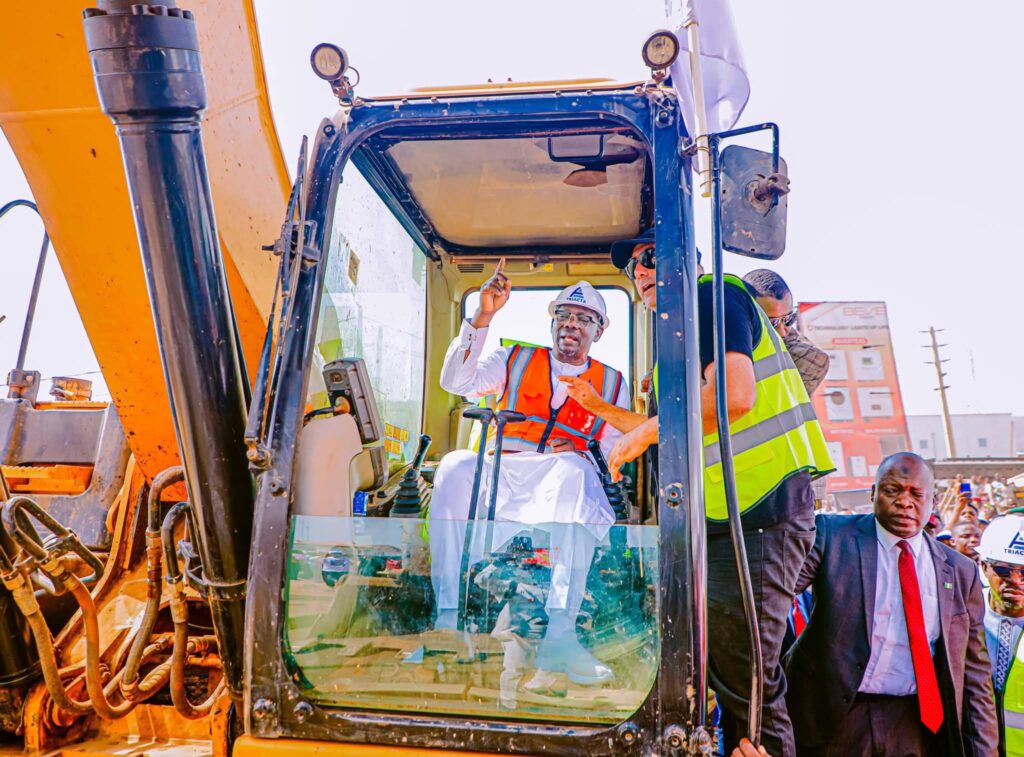
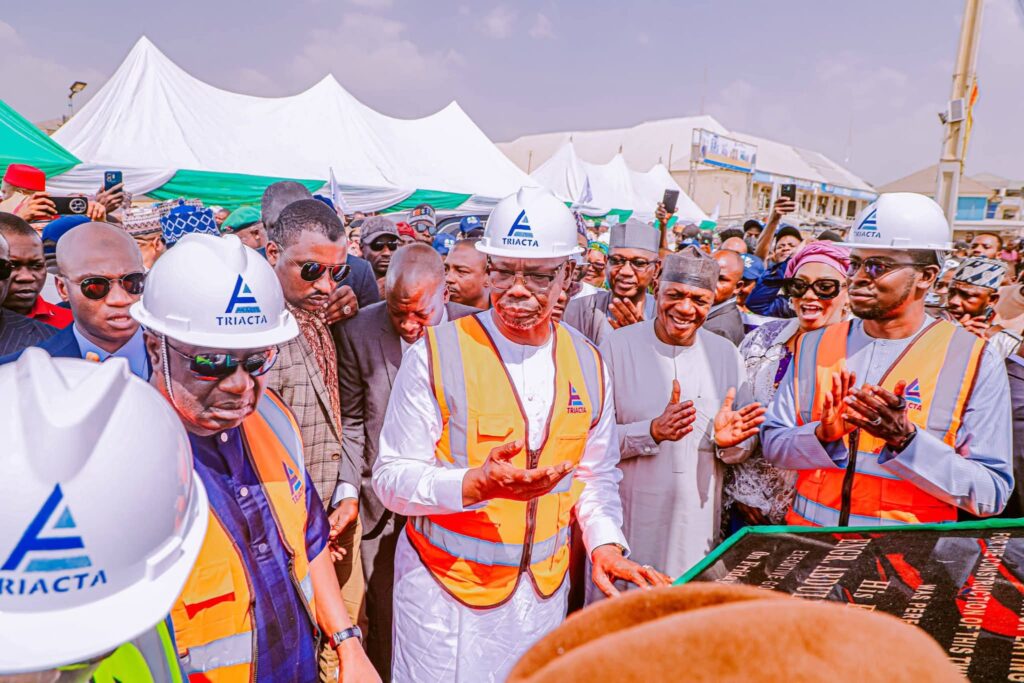
He also performed the groundbreaking ceremony for the Greenville LNG and L-CNG Energy Plant in Shabu, Lafia, which has already been commissioned and now is fully operating, in line with the national and global policy on green energy.In agriculture, a traditional mainstay, the administration continues to drive modernization and food security initiatives.
Worthy of mention are the inroads registered by the administration in rice production through the Jangwa and Ayarkeke rice farm initiatives, leading to the state producing its first rice brand, the NASSACO Rice, now being sold across markets. Infrastructure development has progressed with a philosophy of continuity. Governor Sule has focused on completing inherited projects while starting new ones.
Key among these is the dualisation of the vital Shendam Road in Lafia, which connects major government institutions including the Government House, State House of Assembly, and High Courts. His administration has also inspected and pushed for the timely completion of various road projects across Kokona and Akwanga Local Government Areas.
A major new infrastructure plan involves the allocation of over ₦30 billion for the construction of four flyovers and four underpasses in Akwanga, Keffi, and Mararaba to ease chronic traffic congestion. Beyond physical roads, the governor is building a different kind of infrastructure: political bridges.
He has nurtured genuinely cordial relationships with his predecessors, Senators Abdullahi Adamu and Umaru Tanko Al-makura, transforming political transition into a developmental asset and creating a rare model of collaboration in Nigeria’s often turbulent political environment.
Perhaps most importantly, the administration’s people-centered approach is evident in social investment. Governor Sule has emphasized youth empowerment and human capital development as cardinal goals.
Direct social interventions include empowering 130 widows with N100,000 each as seed capital to start businesses and providing support to over 100 orphans.
His vision for a 21st-century economy includes the Nasarawa Technology Village, a joint venture with global tech firms that has attracted significant private investments and created jobs for youth, aiming to position the state as a future innovation hub.
The Kudin A. A. Sule, a monthly stipend for vulnerable persons is transforming lives as beneficiaries form thrift societies where individuals contribute funds to enable them embark on meaningful economic ventures.
In the area of security—a fundamental prerequisite for development—the governor has convened expanded security council meetings with traditional rulers and local government chairmen to address emerging threats, focusing on issues like the proliferation of illegal arms and farmer-herder clashes.
He has also engaged directly with heads of federal security agencies, including the Inspector General of Police, to strengthen measures for maintaining peace.
His approach of engaging communities and security agencies has been credited with restoring peace to previously volatile mining zones.Governor Sule’s administration from 2023 to date demonstrates a conscious effort to intertwine development with trust-building.
By institutionalizing transparency through digital tools, enforcing accountability through partnerships and internal discipline, and channeling resources into strategic economic projects and social programs, the government is working to show citizens that governance can be open, predictable, and results-oriented.
While challenges remain and no administration is perfect, the deliberate steps taken to make governance a transparent and accountable process are building a foundation of trust that is essential for the sustainable development of Nasarawa State.
As the governor himself maintains, this approach is not just for political benefit but is a sincere attempt to align leadership character with the wishes and welfare of the people.